
Better than reality
Rental family services in Japan

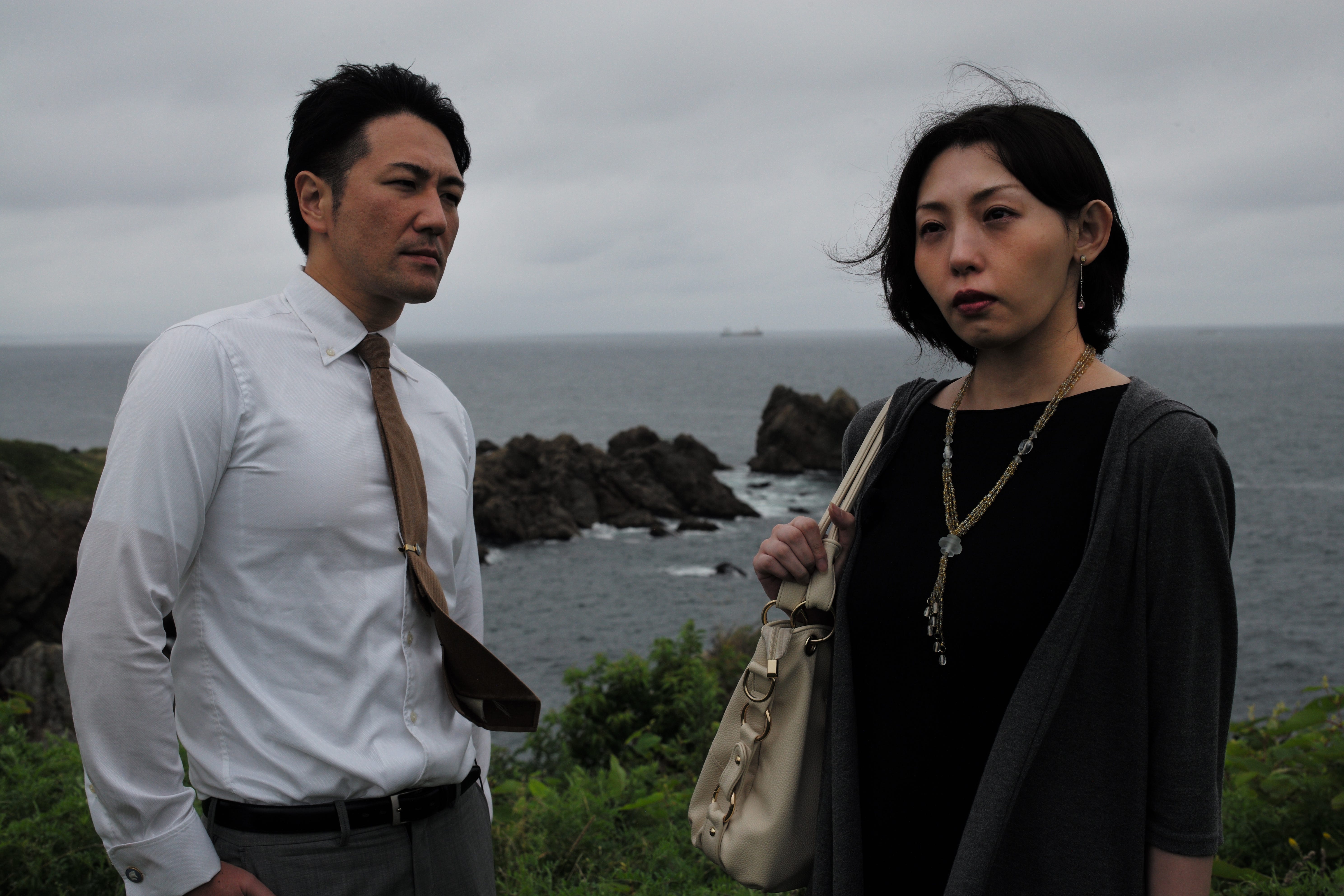
Dear readers, you may know Rental Family (2025), a Japanese American film starring Brendan Foster as an American actor based in Japan who begins working for a rental family agency, where he plays roles in the lives of strangers.
Rental family or stand-in services match clients with actors who step in as friends, relatives, or coworkers, whether for a wedding, a public appearance, or simple platonic company. The model originated in Japan in the early 1990s.
Although this is not the first time these agencies have been the subject a feature film. In 2019, Werner Herzog directed Family Romance, LLC.
Its title comes from the name of a Tokyo-based company that rents out replacement relatives, and though being a work of fiction, its plot is based on several cases the company has been involved with over the years.
To add one more layer to this already complex subject, the actual agency featured in Herzog’s film was involved in a couple of scandals related to how it had been covered by the media.
The main controversy centered on a high‑profile TV documentary by public broadcaster NHK, Happier Than Real, that was later revealed to have staged key elements. The documentary featured a man who supposedly hired Family Romance to provide a “wife” and “children” after the death of his real wife. It was later discovered that the “client” himself had been hired by Family Romance, meaning the documentary presented a fabricated scenario as real. NHK issued a public apology in May 2019, calling the situation “extremely regrettable.”
The same thing happened when The New Yorker published a longform piece on Japan’s rental family services, drawing heavily on interviews with a man who claimed to have used such services. Later, it became clear that the source had invented or embellished parts of his story, including personal background details.
A detailed analysis in The New Republic argued that The New Yorker had been “duped by a source’s fabrications”, and that the fact‑checking process failed to catch inconsistencies.
This revelation raised broader questions about how media representations may sensationalize or distort the practice, making it difficult to understand what is genuine.
The case of The New Yorker also fed into a broader critique of how Western media sometimes falls into the “Weird Japan” framing, sensationalizing niche or ambiguous cultural practices without sufficient verification.
When I talked to Family Romance’s founder, Ishii Yuichi, about Herzog’s film and his company, I already knew about those incidents. However, more than being shocked by Ishii’s lack of ethical principles, I found myself appreciating the way he had turned the media’s own methods back on them, using their expectations as his plaything and having fun at their expense.
Before reading the interview, please remember that if you like what I do and want to help, you may want to subscribe.
Until April 25, there’s also a special 80% discount on annual paid subscriptions.
$30 → $6 (see link above)
Any kind of support is truly appreciated—whether it’s liking, commenting, sharing, or re-staking. Every bit helps spread the word and makes Tokyo Calling more visible. Thank you.
Tell me about Family Romance, LLC. How was the project born?
Herzog came up with the idea of making a film in May 2017 after reading my interview with an American magazine. He came to Japan at the end of the year to learn more about Family Romance, and after deciding that the subject was interesting enough, he set up the audition with the condition that only our real staff and clients would be considered for the job. The shooting started in April 2018, for a couple of weeks, and was followed by another session in summer. The story itself can be described as reality-based fiction. In other words, the script was created around several cases my employees and I had actually worked on in the past.
How was it working with Herzog?
I’m a big movie buff and already knew his rather unique films, so I was honored to work with him. In the beginning he was a little intimidating, but the more we worked together the more he showed a kinder side of himself, and in the end I felt quite at ease. Working on this project was also different from other films. We didn’t have a real script with lines each actor was supposed to say. Every day we were told what to wear and where to meet. Once we got to the shooting location, Herzog would explain the scene we were going to do and gave us directions about the things we had to say, but the actual acting was mainly improvised. I think he wanted us to be as natural as possible in front of the camera; he didn’t want us to act as much as being ourselves. After all, Family Romance’s staff is used to “act” every time we are on the job, but we must be always ready to quickly adapt to different circumstances, so I guess Herzog trusted our ability to carry each scene without memorizing our lines.
The film was also shown at the Cannes Film Festival.
It’s funny because over the years my job has put me in many embarrassing situations, but the idea of being on the big screen and being compared to real professional actors was even scarier (laughs).
I read that you had some acting experience even before founding your company.
Yes, it’s true. Actually, several people who work for Family Romance work as actors. They also work for us because the very nature of the job put them in different real-life situations through which they are able to hone their acting skills. We have a network of about 3,000 people around Japan (60% women, 40% men) including a number of foreigners. Our staff comes for every walk of life. We need all kinds of people because of the wide range of requests we receive every day. So anybody can sign up with us. New members don’t have to pass an interview or audition. Rather, when we receive a request, we gather several possible candidates for that particular role, depending on the clients’ needs and requests, and let them choose the person they like; the one who comes closer to their expectations.
A client may have foreign friends coming to Japan on holiday and hire a foreigner resident to show them around the city. We even had a client who for some reason had lied about having lived abroad and hired a few foreigners to show everybody that she had many friends from other countries.
How does your cast get ready for a job?
We have a manual to help them deal with each situation (rental parent, fiancée, child, etc.). As Family Romance founder, I am obviously the longest-serving member, so from the start I have written down all the experiences I have accumulated on the job, including both my successes and my failures, highlighting what works and what should be avoided in each situation, for the benefit of the newcomers. Reading the manual, of course, is part of their training.
You seem to do many wedding parties.
We receive many requests, ranging from providing a few guests to a client who doesn’t have enough friends or relatives on his side to organizing the whole party and providing a fake spouse and in-laws. I know it must seem very strange, but people in Japan are very fussy about form and ceremonies. Appearances are important and they think they cannot betray other people’s expectations.
Our major source of work are “rental family” requests, particularly “father” jobs. Again, there are many social situations in which the father’s presence is needed. Unfortunately the real father may not be available (e.g. due to a divorce or death) in which case our clients rent a man who poses as the father. The idea to start this agency was actually born from such a situation: a friend of mine was a single mother who wanted to send her son to a private kindergarten. Children with both parents are usually favored during the screening process, so I posed as my friend’s husband.
Why do you think that companies such as Family Romance are popular in Japan?
When talking about social interactions in Japan, the concepts of tatemae (appearances) and honne (what one really thinks) are often discussed. In my country, in many situations the former one usually prevails. Whenever people find it difficult to tell the truth or show a situation for what it really is, they find it useful to ask for help from a substitute, a proxy such as Family Romance.
We think that saving face is extremely important, so people try to avoid at all costs situations in which someone could be embarrassed. That person could be either himself or a third party.
For example, someone makes a mistake on the job and has to apologize to his client. These things are big deals in Japan, and the culprit’s direct superior has to go with him to the client’s office. However, our client doesn’t want his boss to know. So, one of our staff impersonates our client’s boss. Result: everybody’s happy, nobody loses face, nobody gets hurt.
The baby boom generation of the 1960s grew up in relatively larger families where there was a lot of verbal communication going on between the older and younger generation. Since then, though, the size of the average family has gradually shrunk, and many people have been raised as an only child. Once they leave school, they lack communication and social skills and don’t know how to deal with many situations. This problem has been further compounded by the advent of the internet and social networks, where most so-called communication is remote, non-verbal, made of one-liners or simple “likes,” and everybody seems to live isolated from the outside world. It’s not a coincidence that a range of new rental services have appeared in the last few years to address these problems – like Ossan Rental, a company that rents older men to whom you can confide your troubles and ask for advice.
To be sure, there are certain problems that are typically Japanese or are less likely to occur in other countries. Bullying at school, for example, is widespread in this country, and you can be harassed by your classmates because your mother is a divorcee or because she is fat, just to mention two cases we have dealt with. This said, I think that the human rental model can be successful in other countries too. After all, cultural differences aside, there are some basic values and features that are common everywhere, and family and social relations are among them.
Family Romance and similar companies have been criticized for creating a fake world.
I disagree. First of all, reality has become a very relative concept, especially in the internet age. People use computers all the time to retouch their pictures and look more attractive. As for the things one finds on Facebook or Instagram, one is often left wondering whether they are real or fake. Then we can consider more philosophical questions: for example, what is a family? Is a real family, based on blood ties, necessarily better than a family based on other factors?
You could say that the world is unfair, and my business exists in order to bring some relief to people who suffer because of its unfairness. Our slogan is “better than real” because we create situations where there is less conflict. In a sense, we offer a more perfect form of reality.
I know that some people end up requesting a rental parent or friend more than once.
Yes, as far as friends are concerned, for example, about 40% of our clients request the same staff more than once.
Isn’t there a risk that interacting with the same person over a length of time lead to a deeper relationship and, at times, even uncomfortable situations?
It’s true that while I always keep in mind that I’m only doing a job – I’m just acting – and I’m careful to keep a certain emotional distance, my client can sometimes forget the original deal between us – that she is paying me to act – and let herself become too involved. Especially if I’m asked to be someone’s husband or fiancée, there is always a distinct possibility that the line between reality and fiction gets blurred and my client becomes to attached or even falls in love with me. After all, every time we meet, for a few hours I become a “perfect friend or partner” – the kind of man my client has requested.
In this sense, our motto, “better than real,” becomes a double-edged weapon. For the client it can be quite addictive, which is not why I started this business. Actually I try to achieve just the opposite: I hope that my clients eventually grow out of the situation we have created and are able to stand on their own feet. For example, when I play a friend of a shy person, I try at the same time to gently show them ways to overcome their shyness and make real friends. There is also an economic reason for this: our service can be expensive over time (e.g. renting a parent typically costs 20,000 yen for four hours), and some people end up borrowing money to keep our meetings going. That’s definitely something I want to avoid at all cost. This is a business, of course, but this is not the reason why I started Family Romance. I genuinely want to help my clients.
In the last few years, your company has become quite well-known in Japan and you have been interview many times. On the internet there are many photos of you, and now you have even started a You Tube channel. Are you not afraid that someone (e.g. a wedding guest) finds out who you really are?
There is always a chance that I get caught, so I try to come up with excuses or back stories to explain certain situations. For example, if a child reads somewhere that my name is Ishii, his parent can say that’s not my real name and I was pretending to be someone else because of my job. In other words, in order to protect my cover, my fictitious self, we turn my real self into a fake (laughs).
It’s quite mind boggling. When you think about your job, what do you think you really are? Are you an actor? A sort of counselor?
It’s true that I act and in a sense I offer some sort of psychological help, but I’m neither an actor nor a counselor. I’m just someone who tries to help people mend the wounds in their heart, and bring some kind of happiness or peace into their lives.
You have a rule that each staff in your company can only handle five different families at one time. Nevertheless, it must be hard to switch personality every time. How do you find a measure of psychological balance inside yourself?
You definitely must have a firm control on your emotions and continually keep your mental state in check. Of course one could say that what we do is like being a professional actor. On the other hand, we are dealing with real life and have what we may call a moral responsibility toward our clients. So to answer your question, it’s not easy, considering that sometimes I do even three or four different jobs in one day. There are times when I lose my grasp on reality and start questioning who I really am. For example, I may be at home watching TV, and I find myself laughing like the father I played the day before. That can be quite scary. I find the best antidote to these identity crises is spending time with my parents.
Or you can go on holiday just to have a complete change of scenery.
Unfortunately I don’t really take vacations right now although there are cases when I travel because of my job. Some time ago, for instance, I went to Vietnam because my client wanted to introduce her “husband” to her relatives. It was still a job, but at least I had a chance to visit another country and have some fun.
Oh, so interesting! Japan never ceases to amaze me! Family rentals ... how tempting ... but, no! I must be strong! Seriously, though, it does remind me of how the Ancients rented professional mourners for funerals because their own families couldn't be trusted to mourn 'correctly'. Amazing post, Gianni.
Sounds like The Twilight Zone!