
Playing with fire
Learning about natural disasters can be fun

Dear readers, as you know, a few days ago Kumamoto Prefecture was once again struck by a major earthquake. That’s the reality of living in Japan: you never know where or when the next one will hit.
Knowing how to prepare for and respond to a natural disaster is essential. That’s why I’m putting together a three-part series on the subject.
Living in Japan is like sitting on a ticking bomb that could go off anytime. Not only this country is one of the most earthquake-prone places in the world, we also have tsunamis, floods, active volcanoes and a typhoon season which every year wreaks havoc through the archipelago.
Most of us have filed this notion somewhere in a dark corner of our mind and try not to think too much about it, but the fact remains that a strong earthquake can hit anytime, when we are walking in the street, riding on a train or sleeping in our homes, and how we react in those first few seconds can save our life.
Luckily for us who live in or around Tokyo, there are plenty of places where we can learn everything we need on how to deal with a natural disaster. And this being Tokyo, we can actually have some fun in the process.
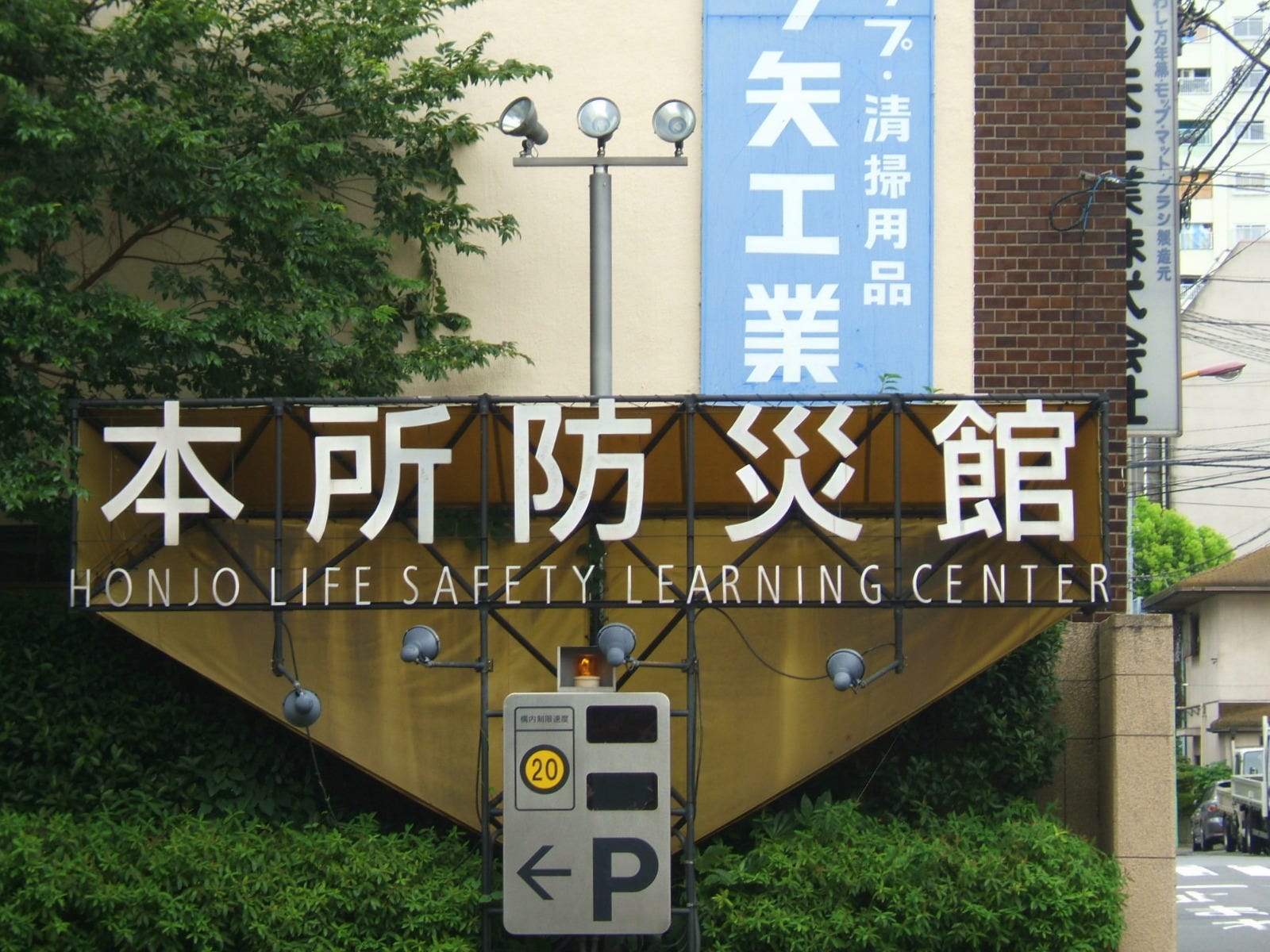
Tokyo has a few “disaster prevention centers” but if you only have time to visit one, there is no better way than spending a few hours at the Honjo Life Safety Learning Center.
Strategically placed not far from the Tokyo Sky Tree (you can even plan a whole day out in that area), this center is the latest and biggest Bosaikan – as they are called in Japanese – to appear in Tokyo. Two more can be found in Ikebukuro and Tachikawa, but this mammoth building is the best of the three. It houses exhibitions, a well-stocked library and other amenities, but the main reason why most people visit it is its two-hour course in which you can watch a 3-D “earthquake movie;” experience a Magnitude 77 earthquake; escape from a smoke maze (replicating an apartment on fire); practice how to extinguish a fire; and brave a storm.
You can think about it as a disaster-themed amusement park, and indeed, you can find many families among the visitors.
The tour starts from the Disaster Prevention Theater located on the 4th floor. Here you put on 3-D glasses and watch an instructional movie on what to do when an earthquake strikes.
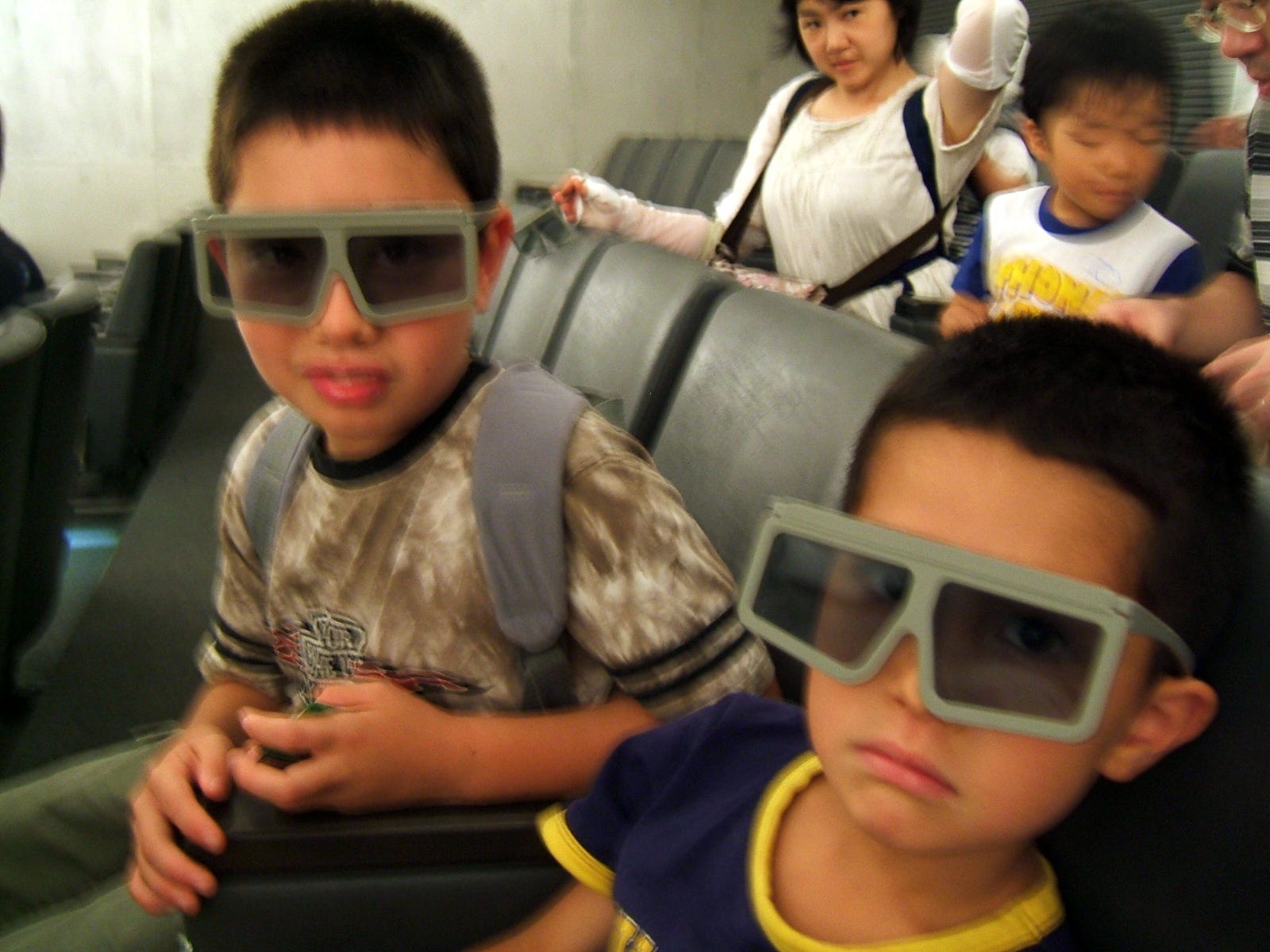
The movie was clearly shot many years ago but looks very realistic and is genuinely scary. It reminds me of one of those cheesy disaster movies of the ‘70s.
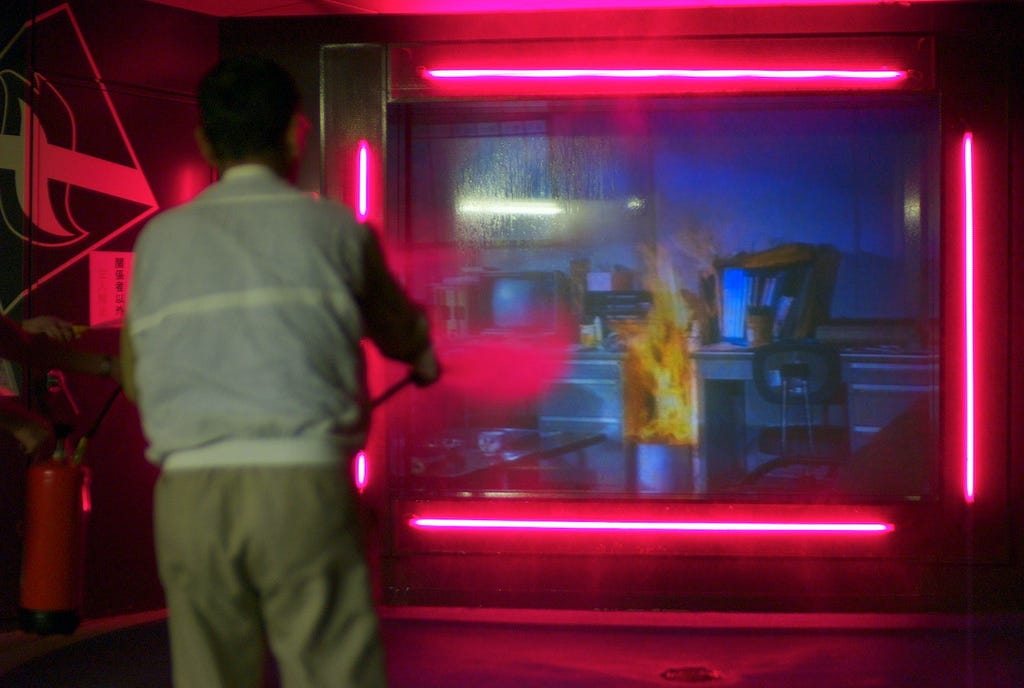
Next up you tackle fires and enter the Smoke Maze Section: an apartment-like environment where you have to find the exit while moving in a crouched position in order to avoid inhaling the smoke. Then they give you an extinguisher and teach you how to use it. By aiming it at a screen showing a room on fire, you can magically put out the flames.
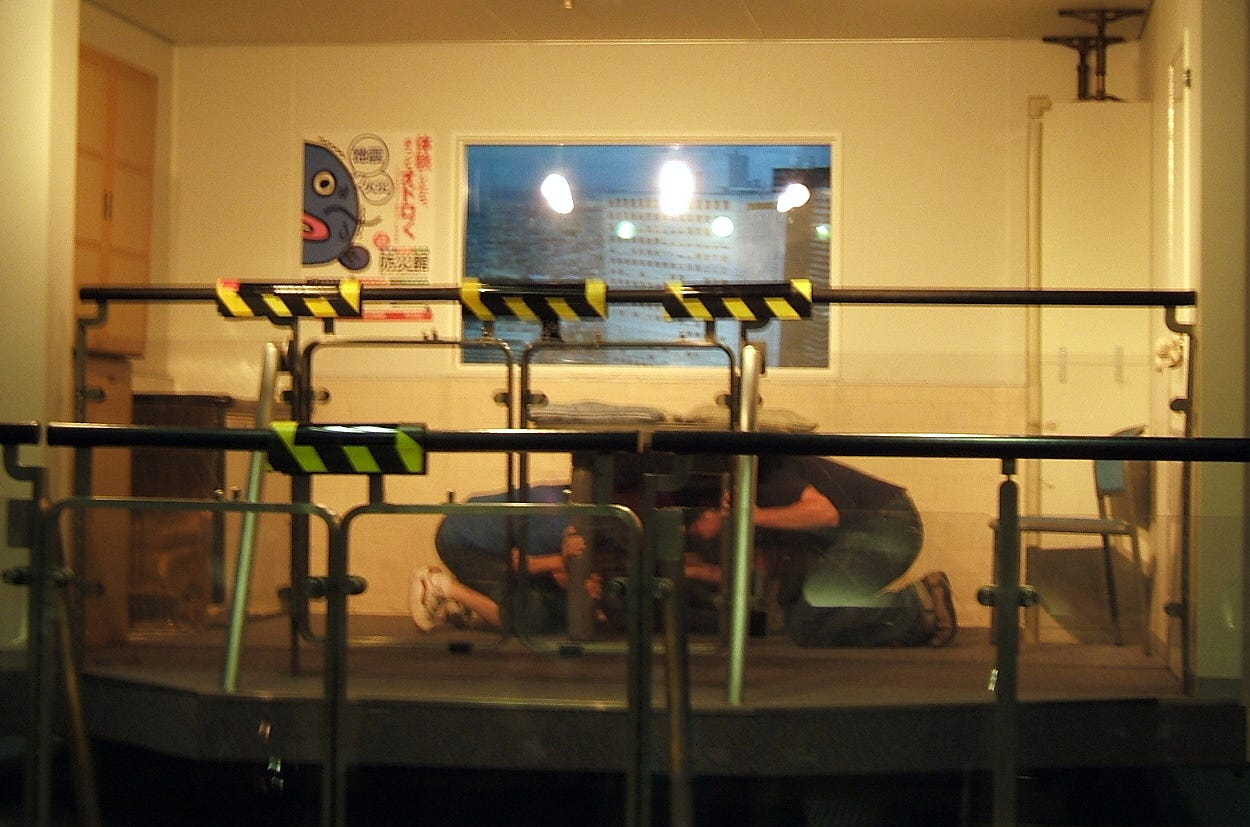
Obviously, the place everybody can’t wait to see is the Earthquake Simulation Section – or so it was before 3/11. Your guide decides how much to make the machine shake depending, for instance, on your age, but if you are a healthy and brave adult, he is likely to set it all the way up to 7.
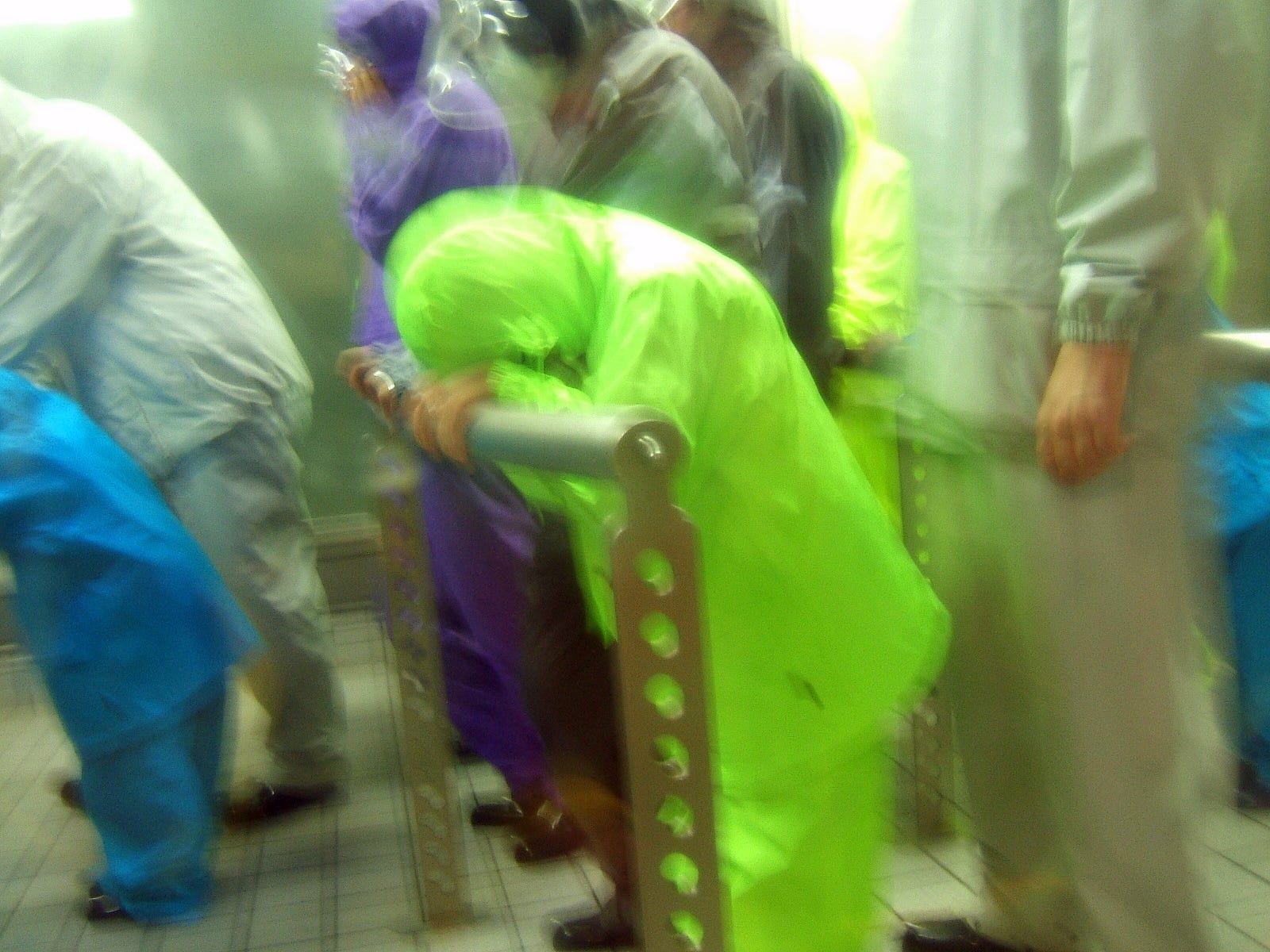
If you need to clear your head after all the rocking and rolling, there’s nothing better than a good shower. So you are invited into the Rainstorm Simulation Section – but not after putting on heavy hooded raincoats and boots.
Visitors are guided through every stage by an instructor, and everything is safe even for children. At the same time, everything feels authentic and gives you a good idea of the real thing.
All the explanations and instructions are in Japanese, so you are advised to get an app or come with someone who can help you with the language. In any case you can enjoy the experience even by just doing what the other people do.
While we catch our breath, please remember that paid subscriptions are always gratefully accepted.
At the same time, I want it to be as easy as possible to show your support. That’s why I’ve introduced a sliding-scale annual subscription, where you can choose the level that feels right for you (book not included):
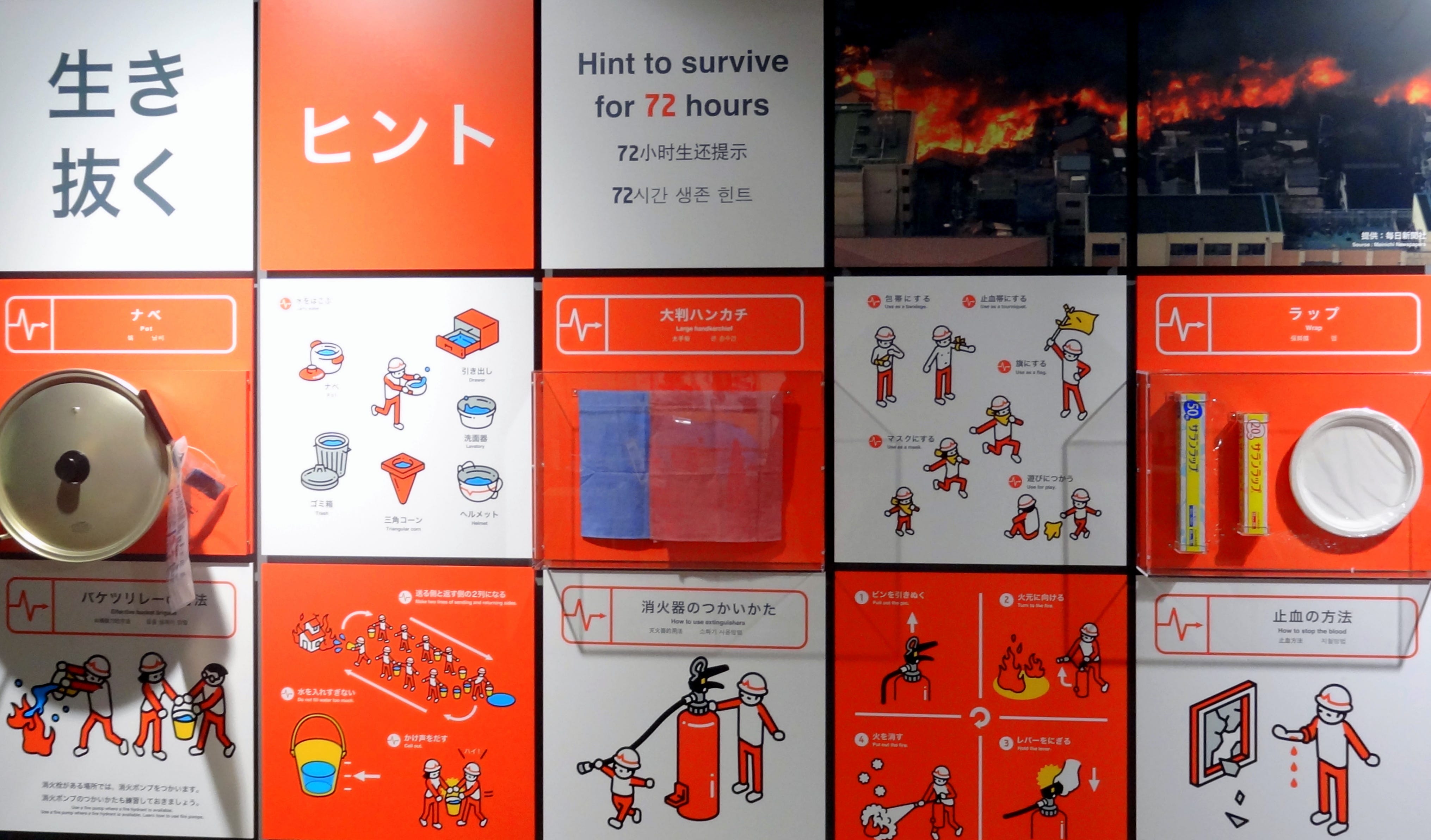
Those of you who want to experience more scary scenarios are advised to head to the Tokyo Rinkai Disaster Prevention Park. On the second floor, visitors find a large amount of bilingual information; can compare emergency equipment from around the world; and watch a couple of videos – a “Mega Quake” documentary and a specially edited version of the animation movie Tokyo Magnitude 8.0 (you can find the eleven-part series on You Tube).
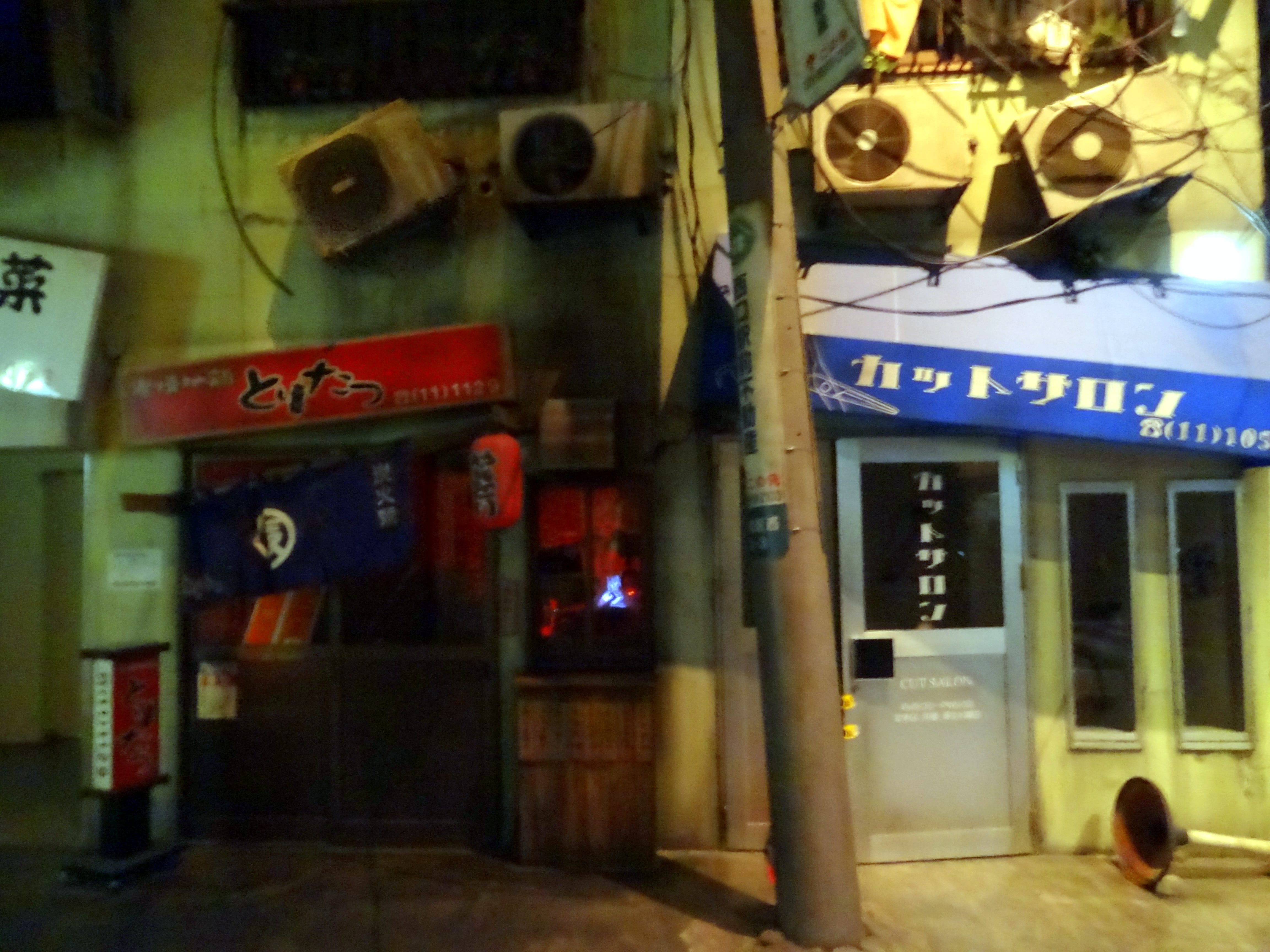
The real “fun,” though, awaits you at the “72 Hours” simulation zone on the first floor, where you are handed a multilingual Nintendo DS game console and are guided around an imaginary earthquake-devastated Tokyo.
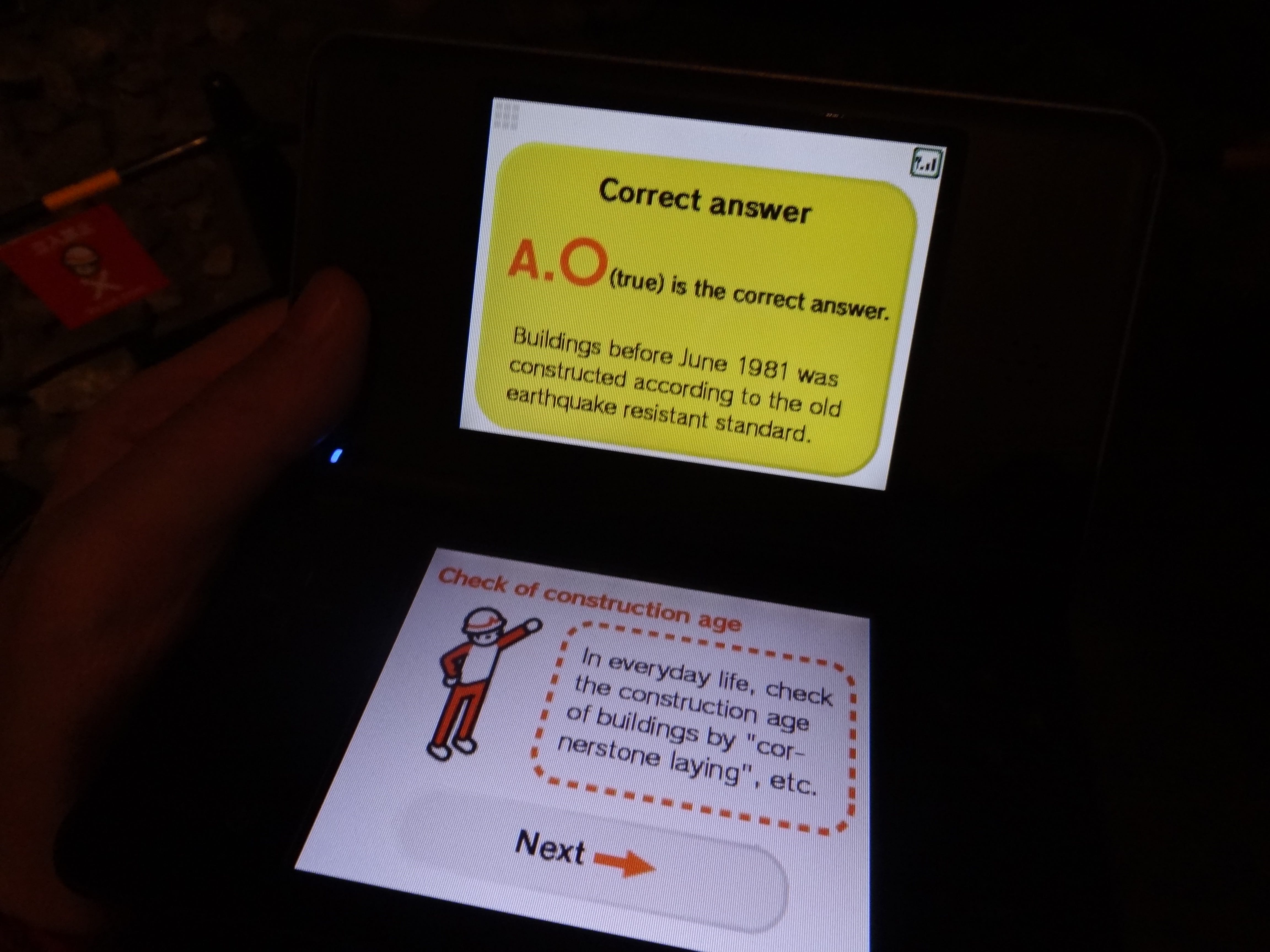
Your console directs you to different places and you score points by answering its questions. The aim of the “game” is to see how well you can survive the first three crucial days following a disaster, i.e. before organized rescue gets under way.
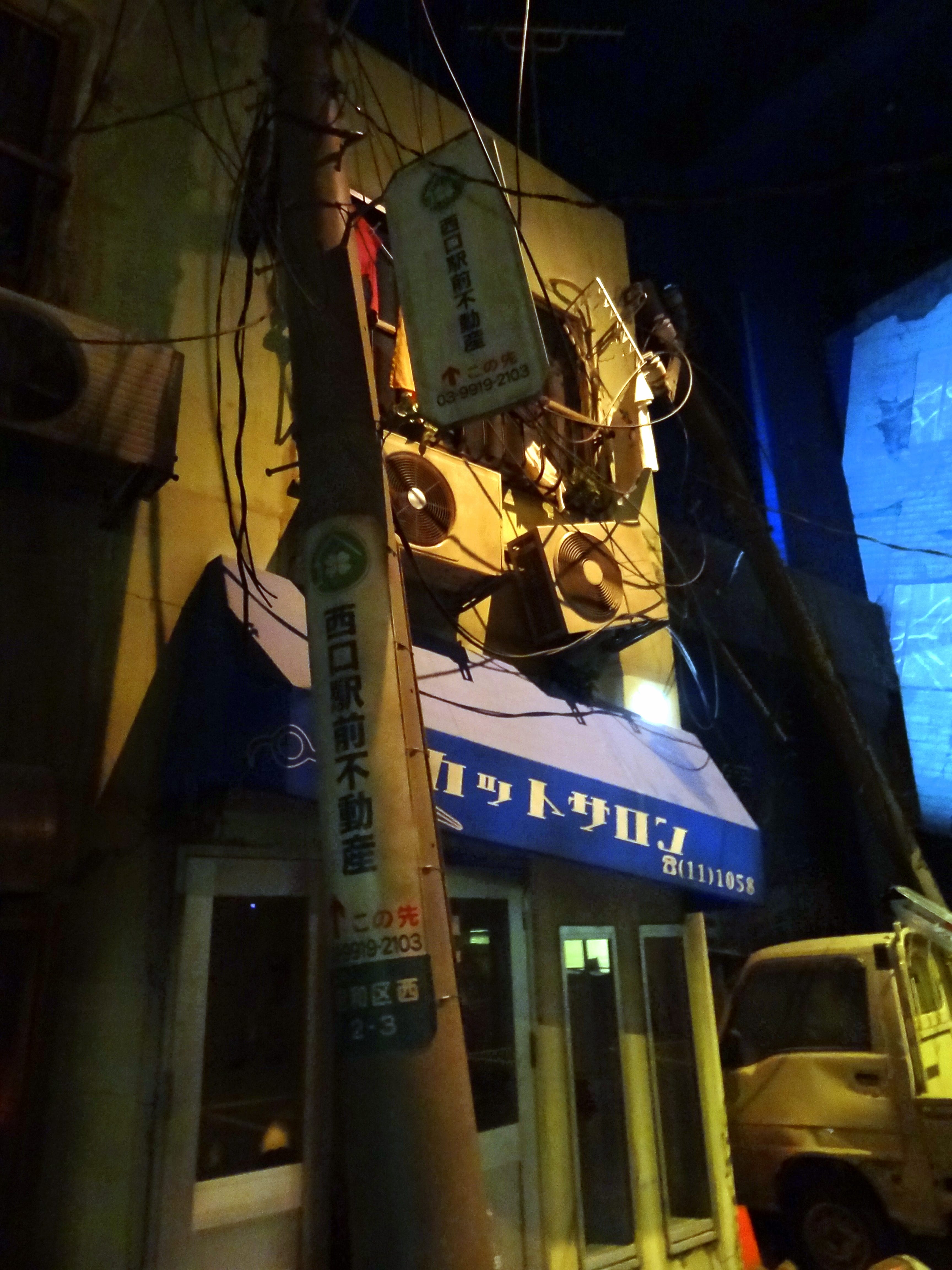
“72 Hours” is very well done and its only fault is that it’s over too soon. Just be warned that smaller children could find the dark and noisy environment a little overwhelming.
Speaking of earthquakes,
what are two things you should always bring with you, especially in a city like Tokyo?
Let me know what you think. I’ll give you the answer in the next episode.
Honjo Bosaikan
4-6-6 Yokokawa, Sumida-ku.
https://www.tfd.metro.tokyo.lg.jp/taiken/honjo/index.html
Price: free, but you need to make a reservation by phone in Japanese (03 3621 0119).
Hours: 9 am – 5 pm (last admission: 4:30).
Tokyo Rinkai Disaster Prevention Park
3 Ariake, Koto-ku.
https://www.tokyorinkai-koen.jp/en/
Price: free. No reservation required.
Hours: 9.30 am – 5 pm (last admission: 4:30).
"Speaking of earthquakes, what are two things you should always bring with you, especially in a city like Tokyo?"
Now that's a really good question.
I think a flashlight and a bottle of water. I usually have both - though the flashlight is just one app on my phone...
Great finds, Gianni! I had no idea. On my next museum/gallery run into Tokyo I think I'll add to the list.